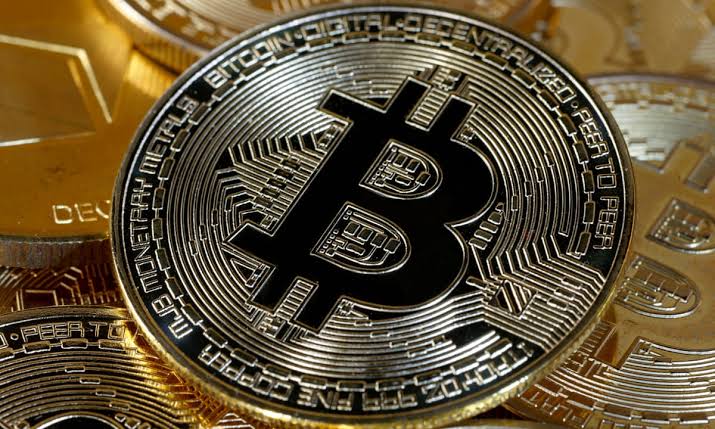


On-chain data shows that on October 7, US government-linked addresses transferred over $100 million in crypto assets, involving Bitcoin and BNB, though sales have not been confirmed. On October 8, oil prices jumped on reports of an Iran strike plan, and Bitcoin broke below the key $83,000 support level, with market risk appetite disrupted by multiple factors.
On-chain data has disclosed that US government-linked addresses made large crypto asset transfers on October 7, with a total value exceeding $100 million, involving Bitcoin and BNB. The related sales have not been confirmed, but the movement has drawn sustained market attention to the direction of government asset disposals. On October 8, Bitcoin broke below the key $83,000 support level, and market risk appetite cooled noticeably. The move attracted amplified attention because on-chain behavior by government-linked addresses is highly watched in the crypto market; any large fund movement could be interpreted as a prelude to supply-side changes.
This monitored large transfer came from US government-linked wallet addresses. On-chain data tracking shows the operations took place on October 7, but the actual intent has not yet been officially explained. Since on-chain moves by government-linked addresses are often seen by the market as sensitive signals, participants are more concerned about whether the funds will enter trading channels and whether they signal the start of a disposal process for related assets. However, address transfers do not equal immediate selling; on-chain data itself only proves that transfers occurred between addresses and cannot directly prove that the government has a reduction plan. Market reactions to such information tend to precede official confirmation, and price volatility is easily amplified.
After the government address movement, oil price volatility became a new source of price pressure. According to media reports, oil prices jumped on reports of an Iran strike plan, putting global risk assets under pressure. Subsequently, Bitcoin fell below the key $83,000 support level, further dampening crypto market sentiment. Crude oil is an important reference for global risk asset pricing, and a rapid rise in its price tends to push capital toward defensive assets, exposing the crypto market to periodic capital outflows. It should be noted that the direct causal link between the news of government address transfers and the subsequent price decline has yet to be confirmed; by comparison, the timing between the oil price jump and the coin price decline was more closely aligned, and the two events appeared in sequence, jointly disrupting risk asset pricing.
Despite the short-term disruption to market sentiment, traditional financial institutions have not slowed their entry into the crypto market. Wells Fargo is in talks with Payward, the parent company of Kraken, on crypto trading liquidity cooperation. The talks explicitly target Payward, Kraken's parent company, indicating that large banks' interest in crypto trading services is shifting from earlier observation to actual business engagement. Liquidity cooperation between banks and crypto trading platforms is not a single business; it involves multiple components such as fiat on-ramps, trading depth, and compliance arrangements. If relevant cooperation advances, it will help improve liquidity depth in the crypto market and provide compliant channels for more institutional capital to enter.
Strategies of large holders in major coins are also being adjusted simultaneously. Tom Lee said Bitmine will stop buying ETH. Bitmine's sustained accumulation had been seen as an important buying force in the Ethereum market; once this behavior stops, Ethereum may lose a stable buyer, directly affecting supply-demand expectations. Ethereum's supply and demand expectations depend not only on total supply and staking amounts but also on the behavior of major buyers. The exit of an important buyer may change marginal pricing power and cause short-term suppression of market confidence. Meanwhile, changes in large holder behavior not only affect Ethereum as a single coin but may also transmit to overall crypto market sentiment.
Policy-level cooperation signals are also strengthening. The Central Bank of Kazakhstan has chosen to cooperate with Tether to explore a national-currency stablecoin and tokenization of real-world assets. This cooperation between a central bank and a stablecoin issuer has significance as a regulatory bellwether, and also shows that some countries are attempting to bring crypto assets into the financial system through compliant frameworks. The significance of cooperation between a stablecoin issuer and a central bank lies in introducing on-chain settlement and tokenization tools into the sovereign currency system, while also helping crypto service providers gain clearer policy status. Although such cooperation may not have an immediate impact on short-term market movements, its long-term effects could change the pace of development in the stablecoin and real-world asset tokenization tracks.
Taken together, the current crypto market is in a sensitive stage where multiple factors are intertwined: large transfers from government-linked addresses raise concerns of potential selling, oil prices jumped on reports of an Iran strike plan, traditional financial institutions continue to push forward crypto trading service deployment, important buying strategies for major coins are being adjusted, and central banks are also advancing stablecoin-related exploration. These factors do not exist in isolation; together they affect market risk appetite and short-term pricing.
In the period ahead, the focus should be on several key aspects. First, whether the aforementioned government addresses will continue to consolidate funds or transfer to trading platforms; if the operations remain at the level of wallet consolidation, the actual selling pressure on the market may be limited. Second, whether developments related to the reported Iran strike plan and oil price trends will continue to affect global risk asset pricing. Third, whether the liquidity cooperation between Wells Fargo and Payward can enter a substantive stage, and whether the Central Bank of Kazakhstan's stablecoin and tokenization exploration with Tether will generate more policy demonstration effects. Fourth, whether Bitmine will make further asset allocation adjustments after stopping its ETH purchases. The market will reassess the medium- and short-term supply-demand pattern of crypto assets based on this incremental information.
.jpg)