



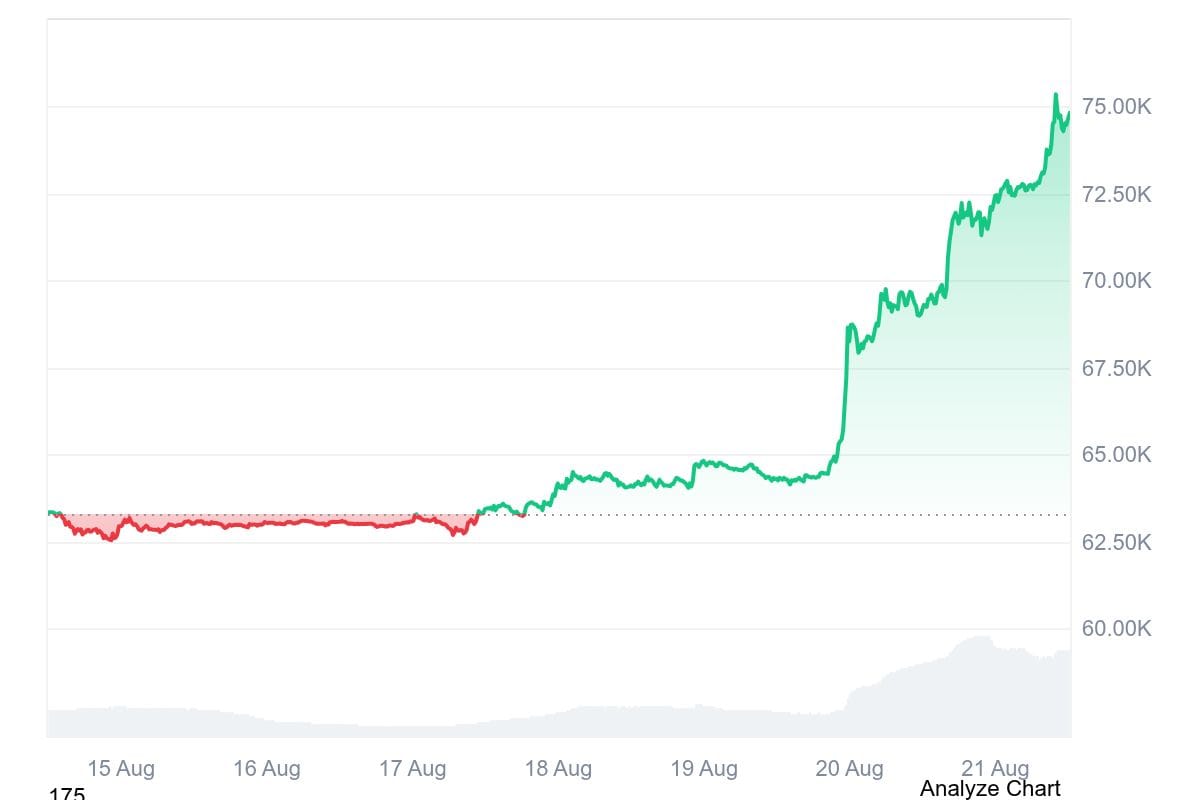
Bitcoin climbed as high as $75,527 on Friday, up roughly 7.7% over the past 24 hours, while Ether rose 5% to trade near $2,337, extending a rally that has pushed both assets to their highest levels since early June. Ether has gained close to 25% over the past week alone.
The move follows a White House meeting on August 19, at which President Trump hosted executives from Coinbase, Ripple, Robinhood, Kraken and ICE and called on Congress to pass a "fair version" of the CLARITY Act, the bill that would settle whether most digital assets are regulated as securities or commodities. The legislation has been stalled in the Senate, with a procedural vote now scheduled for September.
Traders have treated the meeting as a signal that the administration intends to keep pressing for the bill's passage, even though it has not yet moved through Congress. Regulatory uncertainty over whether the SEC or the CFTC holds jurisdiction over most tokens has weighed on institutional participation in crypto markets for years, and any resolution would remove a longstanding overhang on valuations.
The rally also has a macro tailwind. The Treasury Department said this week it would double its long-term bond buyback operations, from $2 billion to at least $4 billion per transaction, in operations running between September 9 and November 4. The announcement pulled the 30-year Treasury yield down from 5.337% to around 5.20%, lowering the opportunity cost of holding riskier, non-yielding assets such as bitcoin and ether.
Bitcoin's market capitalization stood at roughly $1.5 trillion on Friday, with the asset holding just over 53% of total crypto market share, according to CoinGecko. Trading volume has picked up alongside the price moves, with Bitcoin recording close to $59 billion in 24-hour volume and ether around $33 billion, both well above their recent averages.
The rally's durability now hinges on two supports holding at once: Treasury yields staying low and the CLARITY Act keeping momentum in the Senate through September. A stall on either front would remove one of the two legs currently underpinning the move, and crypto's history of giving back sharp two-day gains just as quickly means traders are treating the levels as fragile until the Senate vote actually happens.