




The indicators from the Bitcoin market present a mix of contradictions yet remain intriguing.
Despite institutional experts signaling a "capitulation" warning that is historically anything but negative, price activity has plummeted through significant on-chain levels.
The asset finds itself caught in a tumultuous environment characterized by surging demand, a hesitant central bank, and a macroeconomic landscape that presents mixed messages to those willing to take on greater risk.
The Anatomy of the Breakout
Now that Bitcoin has surpassed the Short-Term Holder Cost Basis, it's clear that the bearish trend is starting to fade. This isn't just some graph line; it represents the whole purchase cost of the most active set of investors.
Bitcoin has spent most of the last 284 days trading below this level, which is a common indicator of bear market conditions. With prices hovering around the $79,000 mark, investors are now testing the cryptocurrency's mental toughness.
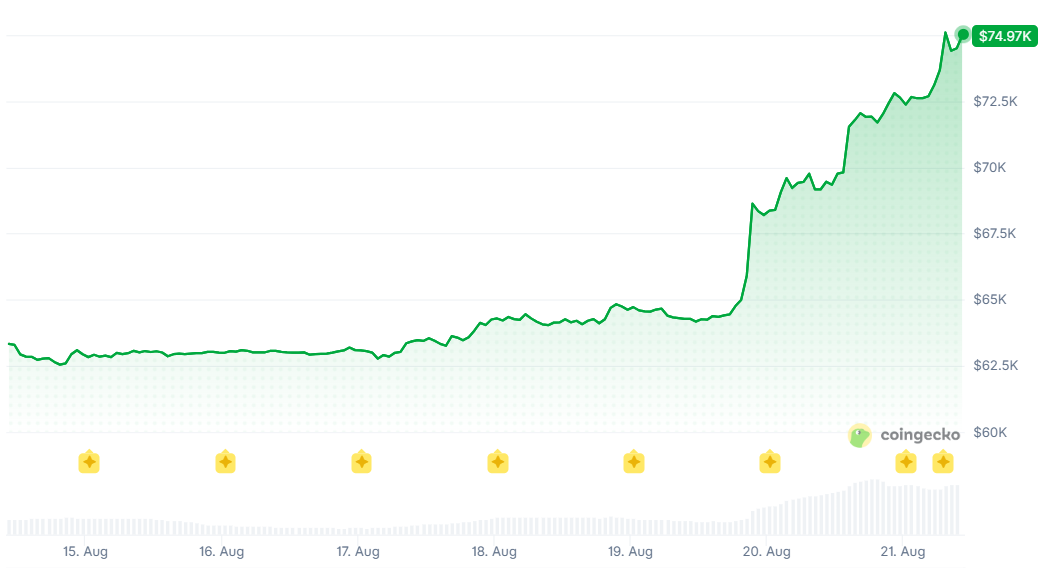
While the break is important, the continuation is crucial.
According to CryptoQuant's research, Binance saw the largest change in profit-taking Unspent Transaction Outputs (UTXOs) to this point in time when Bitcoin approached this level.
If this is the case, then people who are "trapped" in the market are likely to sell their shares at a loss or near-loss as a result of the recovery.
Whether or not spot demand can efficiently absorb this supply and sustain its upward trajectory beyond the cost base will be the true test of resilience.
Capitulation or Accumulation?
The insights offered by asset manager VanEck reveal the complexities of the recent rise.
According to ChainCheck, released by the company in mid-August, eight of the twelve patented capitulation signals are currently operational.
Given the challenges miners are having and the large documented losses, it is clear that the market is experiencing significant instability.
Unlike previous cycles characterized by catastrophic collapses like FTX, Celsius, and 3AC, this downturn does not display the same degree of systemic breakdown, according to the experts.
A "shallower trough" is thus what they expect.
Here, the word "capitulation" is more of a hint that the market is nearing its bottom than a portent of impending doom.
The transition from this extended downturn, which has lasted for around 10 months, to a period of accumulation is usually anticipated to happen between September and November 2026, according to VanEck's estimate.
The Fed's Hawkish Divide
The broader economic landscape serves as an essential counterweight to the positive sentiment observed in on-chain activities.
The minutes from the July FOMC meeting highlighted a notably divided committee, marking the most contentious decision in a decade, with a 9-3 vote to maintain current rates.
Importantly, the minutes indicated that backing for an immediate rate increase went "beyond the three formal dissenters," with a number of other members advocating for a 25-basis-point rise.
However, this aggressive stance is outdated information. Since the meeting, the economic environment has deteriorated significantly.
The July jobs report indicated a reduction of 23,000 nonfarm payrolls in the US economy, while the CPI and PPI data reflected a decrease in inflationary pressures.
Markets have since adjusted their expectations, eliminating the likelihood of a rate increase in September.
The perspective on Bitcoin is multifaceted.
The Fed's assertive stance appears to be limited to non-voting members, indicating that a hold is likely to persist well into 2027.
This alleviates the pressing concern of increased rates, providing support for risk assets.
However, the reason for the pause - deteriorating employment and consumer data - presents a complex challenge.
While an ideal scenario of stable inflation and employment is advantageous, a swift decline into recession would adversely affect liquidity-sensitive assets such as bitcoin.
Bitcoin is transitioning from weakness into strength.
Although the amount of profit-taking shows that resistance is still there, the initial technical indication of this change is the breach of the STH cost basis.
If the data doesn't go from "softening" to "plummeting," the broader economic landscape, characterized by a divided central bank forced to hold interest rates in light of softening data, produces a climate that is ideal for recovery.
The next thirty days are going to be pivotal.
The idea that the bear market ended with the final capitulation signal would be supported by a confirmed hold above the STH realized price and continuous spot demand.