


Bitcoin is trading at $65,590, up roughly 4% over the past week, after President Trump announced a completed peace deal with Iran, the reopening of the Strait of Hormuz, and the end of the U.S. naval blockade. Oil fell approximately 4% on the news, easing one of the most persistent inflation inputs of recent months and giving risk assets a short-term lift.
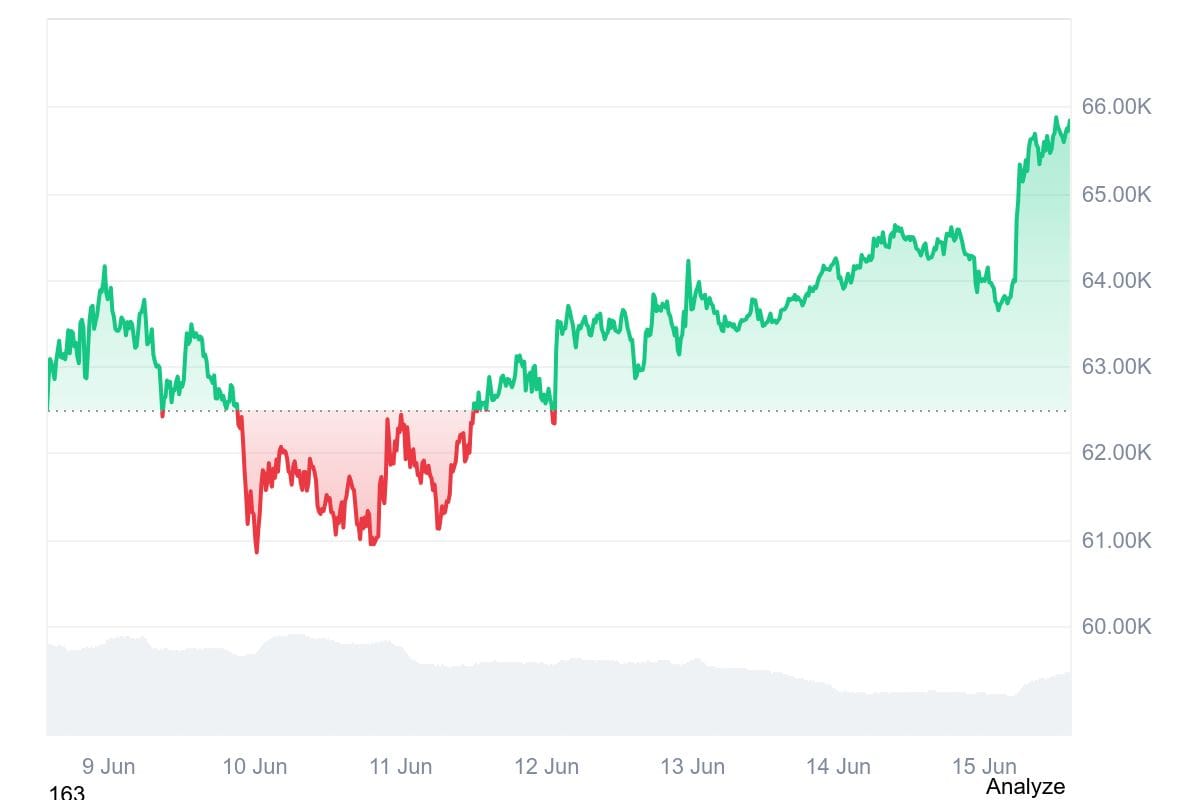
The bounce looks clean on the surface. Beneath it, institutional demand remains thin.
U.S. spot Bitcoin ETF outflows for June 8–12 came in at $316 million — a sharp improvement from the prior week's $1.72 billion redemption wave, but still a continuation of negative net flows. More telling is the volume picture. The 30-day moving average of U.S. spot Bitcoin ETF trading volume has fallen from $4.4 billion per day in October 2025 to $960 million today, a 78% decline. Digital asset company (DAT) trading volume has dropped 49% over the same period, from $34.2 billion per day to $17.4 billion.
The TradFi speculation channels that powered Bitcoin's 2025 run are pulling back, and the Iran deal doesn't change that.
Galaxy Research's bottom-signal framework adds further context: only 4 of 13 historical Bitcoin bottom indicators have triggered. The firm's base case places a potential floor between $40,000 and $46,000 by late 2026, with deeper capitulation possible toward $30,000–$37,000. That's not a consensus view, but it reflects the gap between price stabilisation and confirmed demand recovery.
Onchain, the biggest development is in mining. Bitcoin's difficulty fell roughly 10% this week — one of the steepest downward adjustments of the year — after June's price weakness pushed hashrate offline. The reason is older mining rigs are being shut down and power capacity is being redirected toward high-performance computing and AI data centres. Bitcoin miners are now competing directly with AI infrastructure for energy, a structural shift that could reshape hashrate growth through this cycle.
Strategy resumed buying after a brief pause, adding 1,550 BTC for approximately $101 million and lifting total holdings to 845,256 BTC.
The macro setup this week adds another layer of complexity. May CPI came in at 4.2% year-on-year, the highest reading since April 2023. The Federal Reserve meets Wednesday in Kevin Warsh's first meeting as chair. A hold is expected, but the tone will matter: if Warsh acknowledges the oil relief, risk assets may extend the rebound. If the statement leans hawkish, the rally could reverse quickly.
For now, Bitcoin has a reprieve. Whether it becomes something more durable depends on whether the ETF bid returns.