

The post Ripple CTO Shuts Down XRP’s Biggest Bank Adoption Concern in 1 Sentence appeared first on Coinpedia Fintech News
A crypto investor raised a genuine concern about XRP this week. Ripple’s CTO answered it in one sentence.
Mason Versluis put the question plainly: Ripple holds 34 billion XRP tokens. If global banks adopt XRP and prices reach the levels the community expects, Ripple would become the most valuable financial institution on the planet. Would banks, after conducting extreme due diligence on a cryptocurrency asset, really sign off on making that happen?
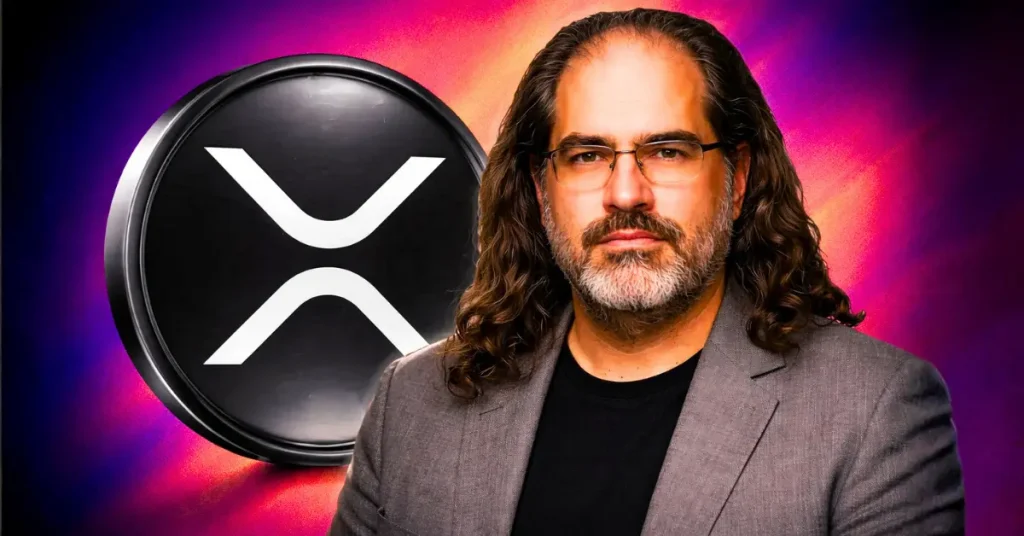
Ripple CTO David Schwartz was unmoved by the logic.
His reply: “Yeah, this makes business sense for us to do and would make us money, but we don’t want to do it because it also makes this other company money.”
The implication is straightforward – banks do not decline profitable infrastructure simply because a vendor benefits alongside them.
Do Banks Actually Care About Ripple’s XRP Holdings?
Schwartz wins the argument. But the more revealing picture comes from what banks are actually doing with Ripple’s infrastructure right now.
Banks that adopted Ripple’s infrastructure in early 2026, including Deutsche Bank and Société Générale, have been settling in RLUSD and fiat rather than XRP – according to analysts tracking the integrations. At least 30 of the 50+ banks inside SWIFT’s new retail payments framework already have ties to Ripple, but most use RippleNet for messaging only, without XRP touching the payment flow at any point.
Ripple Treasury processed $13 trillion in payments last year, with zero percent going through crypto rails.
The $13 Trillion Gap Between Ripple’s Success and XRP Demand
Ripple wins whether banks choose XRP or RLUSD. XRP holders only benefit if banks switch from messaging to On-Demand Liquidity, the service where XRP is actually required as a bridge asset. Across RippleNet broadly, around 40% of connected banks use ODL, meaning 60% are on the rails without ever touching the token.
The CLARITY Act is the variable that changes that equation. If XRP is formally classified as a digital commodity under U.S. federal law, banks gain a clear compliance pathway to adopt ODL at scale.
Until that bill passes, RLUSD is the simpler choice for institutions managing billions in treasury operations.
Ripple’s National Bank Charter and What It Means for XRP Today
Ripple’s national trust bank charter took effect April 1 after the OCC finalized its rules. Yesterday, Ripple launched Digital Asset Accounts and Unified Treasury, putting XRP and RLUSD inside corporate treasury management for the first time and allowing CFOs to manage digital assets alongside fiat in a single interface.
XRP is currently trading at $1.30, down 3.86% in the past 24 hours, with a market cap of $79.86 billion.
Schwartz won the Twitter exchange. Whether XRP wins the adoption race against RLUSD is a question the CLARITY Act has not answered yet.