




The single biggest change for crypto taxes in 2026 is this: brokers are now required to report your cost basis, not just gross proceeds, on Form 1099-DA for covered digital assets acquired on or after January 1, 2026. That means the IRS will receive both sides of your gain calculation automatically, and automated data matching will catch discrepancies your broker reports versus what you file. Three things to do right now:
- Reconcile your records. Pull transaction exports from every exchange and wallet before year-end. Mismatches between your on-chain history and broker-supplied basis are already appearing, and they will trigger notices.
- Elect and document your cost-basis method. Specific identification (SpecID) lets you choose which lots to sell, but you must document the election and timestamp evidence before the sale, not after.
- Set aside liquidity. If you have unrealized gains, estimate your tax liability now. Crypto prices can drop after a taxable event, leaving you short when April arrives.
Pro Tip: Don’t wait for your 1099-DA to arrive in early 2027 before you start reconciling. By then, exchange APIs may have rate limits or data gaps that make reconstruction painful. Pull your exports quarterly.
Key Takeaways
The most important thing to understand about crypto taxes in 2026 is that the IRS now receives both gross proceeds and cost basis for covered assets, making reconciliation between your own records and broker-issued Form 1099-DA the single most critical compliance step this year.
| Point | Details |
|---|---|
| Broker cost-basis reporting is live | Form 1099-DA now includes cost basis for covered assets acquired on or after January 1, 2026. |
| Reconcile before you file | Compare your wallet-by-wallet records to your 1099-DA line by line; missing basis defaults to zero. |
| Keep records for seven years | Transaction exports, wallet addresses, fee records, and cost-basis elections should be retained for at least seven years. |
| Plan liquidity for estimated taxes | Set aside cash quarterly; a price drop after a taxable event does not reduce the tax owed on that event. |
| Consult a tax professional for complex cases | DeFi activity, cross-exchange histories, and foreign accounts exceed what most software handles reliably. |
Table of Contents
- What changed for crypto taxes in 2026: the new broker-reporting rules
- Which crypto transactions are taxable in 2026
- How to calculate gains, determine cost basis, and reconcile your 1099-DA
- Which IRS forms you use to report crypto in the 2026 filing season
- What records you need to keep and how to organize them
- Tax planning tactics that still work in 2026
- Global developments and what they mean for U.S. institutional investors
- Critical dates, common mistakes, and penalties to avoid
- Blockchainreporter’s analysis: how often broker reports and on-chain records diverge
- Your step-by-step checklist to prepare for the 2026 filing season
- How crypto tax rules affect retirement accounts and employer compensation plans
- Why Blockchainreporter covers crypto tax changes and what to do next
- Sources
What changed for crypto taxes in 2026: the new broker-reporting rules
The 2026 tax year marks a genuine shift in IRS enforcement capability, not just a rule update on paper; the timeline matters:
| Effective Date | What Brokers Must Report | Applies To |
|---|---|---|
| January 1, 2025 | Gross proceeds from digital-asset sales | All covered broker transactions |
| January 1, 2026 | Cost basis (in addition to gross proceeds) | Covered assets acquired on or after Jan. 1, 2026 |
| Filing Season | Form 1099-DA issued to customers and IRS | 2025 activity reported in early 2026; 2026 activity in early 2027 |
The IRS digital assets guidance page confirms that brokers must report gross proceeds beginning with transactions on or after January 1, 2025, with cost-basis reporting added for certain transactions on or after January 1, 2026. For practical purposes, that means the 1099-DA forms arriving in early 2027 (for tax year 2026) will be the first to carry both fields for covered assets.
What counts as a “covered” asset? A digital asset is covered when it was acquired through a broker that took possession of it, on or after the effective date. Assets acquired before January 1, 2026, or held in non-custodial wallets, are generally non-covered. Coinbase’s explainer clarifies that decentralized, non-custodial exchanges that never take possession of assets fall outside these broker rules entirely.
A few important caveats on the transition:
- Pre-2026 acquisitions: Brokers are not required to report cost basis for assets acquired before January 1, 2026. You are still responsible for tracking and documenting that basis yourself.
- Transitional relief: The IRS has provided limited penalty relief during the phase-in, but that relief does not excuse inaccurate reporting. File correctly regardless.
- Backup withholding: Brokers that receive incorrect or missing taxpayer identification numbers (TINs) may be required to apply backup withholding. Verify your TIN on file with every exchange now.
The practical consequence is straightforward: the IRS now has a data-matching infrastructure for crypto comparable to what it has had for stock sales for decades. Reporting gaps that went unnoticed before 2025 are increasingly visible.
Which crypto transactions are taxable in 2026
The IRS treats cryptocurrency as property for federal income tax purposes. That one rule drives almost every taxability question you will face.
Taxable events:
- Selling crypto for U.S. dollars or any other fiat currency
- Swapping one cryptocurrency for another (e.g., trading ETH for SOL)
- Spending crypto to buy goods or services
- Receiving crypto as payment for work or services (ordinary income at fair market value on receipt)
- Staking rewards received (ordinary income at FMV when received)
- Mining income (ordinary income for hobbyists; self-employment income for miners operating as a business)
- Airdrops received after a hard fork, once you have dominion and control over the tokens
- Hard forks that result in new tokens you receive
Non-taxable events:
- Buying crypto with fiat currency and holding it
- Transferring crypto between wallets you own (no change in ownership)
- Gifting crypto below the annual gift exclusion threshold (though the recipient inherits your basis)
- Donating crypto to a qualified charity (no capital gains recognized; you may deduct FMV)
The IRS FAQs on virtual currency transactions address hard forks and airdrops specifically, and confirm that taxpayers must report taxable activity whether or not they receive a payee statement. That last point matters: if your exchange does not issue a 1099-DA for a particular transaction, you still owe the tax.
Three worked examples:
Example 1 — Swap: You bought 1 ETH for $2,000 in 2024. In March 2026, you swap it for SOL when ETH is worth $3,500. You realize a $1,500 capital gain. Because you held ETH more than one year, it qualifies for long-term rates.
Example 2 — Staking income: You receive 0.5 ETH in staking rewards in June 2026 when ETH trades at $3,200. You recognize $1,600 of ordinary income on the date of receipt. Your basis in those 0.5 ETH is $1,600 for any future sale.
Example 3 — Spending crypto: You pay for a $500 laptop using Bitcoin you bought for $200. You recognize a $300 capital gain at the time of purchase, in addition to the normal consumer transaction.
How to calculate gains, determine cost basis, and reconcile your 1099-DA
Reconcile broker gross proceeds to your wallet-by-wallet cost basis using specific identification where allowed. That is the answer. Everything else is the workflow.
Sample calculation:
The fee paid to acquire an asset increases your basis; the fee paid to sell it reduces your proceeds. Both reduce your taxable gain, so capturing every fee matters.
Step-by-step reconciliation workflow:
- Gather exports. Download complete transaction histories from every exchange (CSV or API export) and every wallet you own.
- Match wallet-by-wallet. Organize transactions by the wallet or account where each asset was held. The IRS expects basis tracking at the account level.
- Trace transfers. Identify every transfer between your own wallets and label them as non-taxable. Missing transfer records are a leading cause of phantom gains on broker reports.
- Adjust for fees. Add acquisition fees to basis; subtract disposition fees from proceeds. Include gas fees for on-chain transactions.
- Document your cost-basis election. If you use specific identification, record the lot you are selling (date acquired, acquisition price, wallet) before or at the time of the sale. A timestamped record in a spreadsheet or crypto tax software satisfies this requirement.
- Cross-reference 1099-DA. Compare the gross proceeds on your 1099-DA to your own records. Discrepancies for pre-2026 acquisitions are common because brokers may show zero or missing basis.
Pro Tip: A blockchain explorer lets you pull on-chain timestamps and transaction hashes directly, which serve as audit-grade evidence for FMV at the time of each transaction. Save those records alongside your exchange exports.
OnChainAccounting’s practitioner guide emphasizes that full transaction reconstruction and a consistent cost-basis methodology are the practical compliance barriers in 2026, not the arithmetic itself. The IRS matching system will flag proceeds that do not align with reported gains, so the reconciliation step is where most audit risk lives.
Which IRS forms you use to report crypto in the 2026 filing season
Every crypto transaction flows through a specific form. Here is the mapping:
- Form 1040, digital asset question: All taxpayers must answer “yes” or “no” to the digital asset question on the front page of Form 1040. Answer “yes” if you had any taxable transaction, received any crypto as income, or disposed of any digital assets during the year.
- Form 8949: Report each individual capital gain or loss transaction here. Each row corresponds to one disposal. Transactions from a 1099-DA flow to Form 8949 with the broker’s reported proceeds and basis.
- Schedule D: Aggregates your short-term and long-term totals from Form 8949 and feeds into your overall tax calculation on Form 1040.
- Schedule 1 (Additional Income): Staking rewards, airdrop income, and other crypto income that is not self-employment income typically goes here as “other income.”
- Schedule C: If you mine crypto as a business or receive crypto as self-employment income, report gross income and deductible expenses on Schedule C. Self-employment tax applies.
- Form 1099-NEC: If a business pays you $600 or more in crypto for services, they should issue a 1099-NEC. You report that income as ordinary income.
- FinCEN Form 114 (FBAR): If you hold crypto on a foreign exchange and the aggregate value exceeded $10,000 at any point during the year, FBAR filing may be required. Consult a tax professional on this one.
- Form 8938 (FATCA): Higher thresholds apply, but U.S. taxpayers with significant foreign financial assets, potentially including foreign exchange accounts, may need to file.
Three common filing scenarios:
-
Employee paid partly in Bitcoin: The employer reports the FMV of the Bitcoin on your W-2 as wages. You pay ordinary income tax and payroll taxes on that amount. Your basis in the Bitcoin equals the FMV reported as income. Any later sale triggers a capital gain or loss.
-
Staking income only: You receive staking rewards throughout 2026. Each reward is ordinary income at FMV on receipt, reported on Schedule 1. When you later sell the staked tokens, the gain or loss is capital and goes on Form 8949.
-
Active trader on a centralized exchange: Your exchange issues a 1099-DA with gross proceeds for each sale. You import those transactions into Form 8949, match them against your cost basis records, and aggregate short-term and long-term totals on Schedule D.
What records you need to keep and how to organize them
The IRS recommends keeping tax records for at least three years in most cases, and longer when substantial amounts are involved. For crypto with significant gains, seven years is a safer standard, because poor records can lead the IRS to assume a zero basis for your assets.
Documents and data to retain:
- Complete transaction exports from every exchange (CSV and API format)
- Wallet addresses associated with each account you own
- Transfer records between your own wallets, with timestamps and transaction hashes
- Purchase receipts or confirmation emails showing acquisition price and date
- Fee records for every transaction (acquisition, disposal, gas)
- Staking, mining, and airdrop records with FMV on the date of receipt
- Cost-basis election documentation (which lot you designated for each sale)
- Exchange account statements and year-end summaries
- 1099-DA forms received from brokers
What to look for in crypto tax software:
- Wallet-level and account-level lot tracing (not just portfolio-wide)
- Specific identification support with audit-log export
- API imports from major exchanges and wallets
- Reconciliation reports that flag missing basis or unmatched transfers
- Export formats compatible with Form 8949 and tax preparation software
Fidelity’s crypto tax guide recommends that investors using exchanges document cost basis for assets bought on-platform on or after January 1, 2026, since that is the date from which broker-reported basis becomes available. For assets acquired before that date, your own records remain the only source of truth.
Pro Tip: For institutional investors, recordkeeping goes beyond spreadsheets. You need segregated custody records, internal controls over wallet access, and reconciliation reports that tie on-chain activity to your general ledger. A third-party custodian with audit-ready reporting is worth the cost when the portfolio is large enough.
Privacy considerations also affect recordkeeping for peer-to-peer transactions. Research on financial privacy in digital assets highlights how transaction traceability varies significantly across protocols, which affects how thoroughly you can reconstruct a transfer history.
Tax planning tactics that still work in 2026
The core planning toolkit has not changed, but the 2026 broker-reporting environment makes timing and documentation more important than ever.
Planning moves worth executing:
- Tax-loss harvesting. Sell positions with unrealized losses to offset gains realized elsewhere. The wash-sale rule does not currently apply to crypto (it applies to securities), so you can repurchase the same asset immediately. That may change, so document your strategy now.
- Hold more than one year. Long-term capital gains rates (0%, 15%, or 20% depending on income) are significantly lower than short-term rates, which are taxed as ordinary income. Holding a position 366 days instead of 365 can be a material difference.
- Donate appreciated crypto. Donating crypto directly to a qualified 501©(3) charity lets you deduct the full fair market value without recognizing the capital gain. This is one of the most tax-efficient moves available to crypto investors with large unrealized gains.
- Gift crypto strategically. Gifts below the annual exclusion threshold are not taxable events for the giver. The recipient takes your basis, so this works best when the recipient is in a lower tax bracket.
- Offset income with deductible mining expenses. If you mine as a business, electricity, hardware depreciation, and facility costs are deductible against mining income on Schedule C.
Liquidity planning is not optional. Crypto prices can fall sharply after you realize a gain. If you sold Bitcoin at $90,000 in January and the price drops to $60,000 by April, you still owe taxes on the January gain. Set aside cash for estimated quarterly payments (due April 15, June 16, September 15, and January 15) to avoid underpayment penalties.
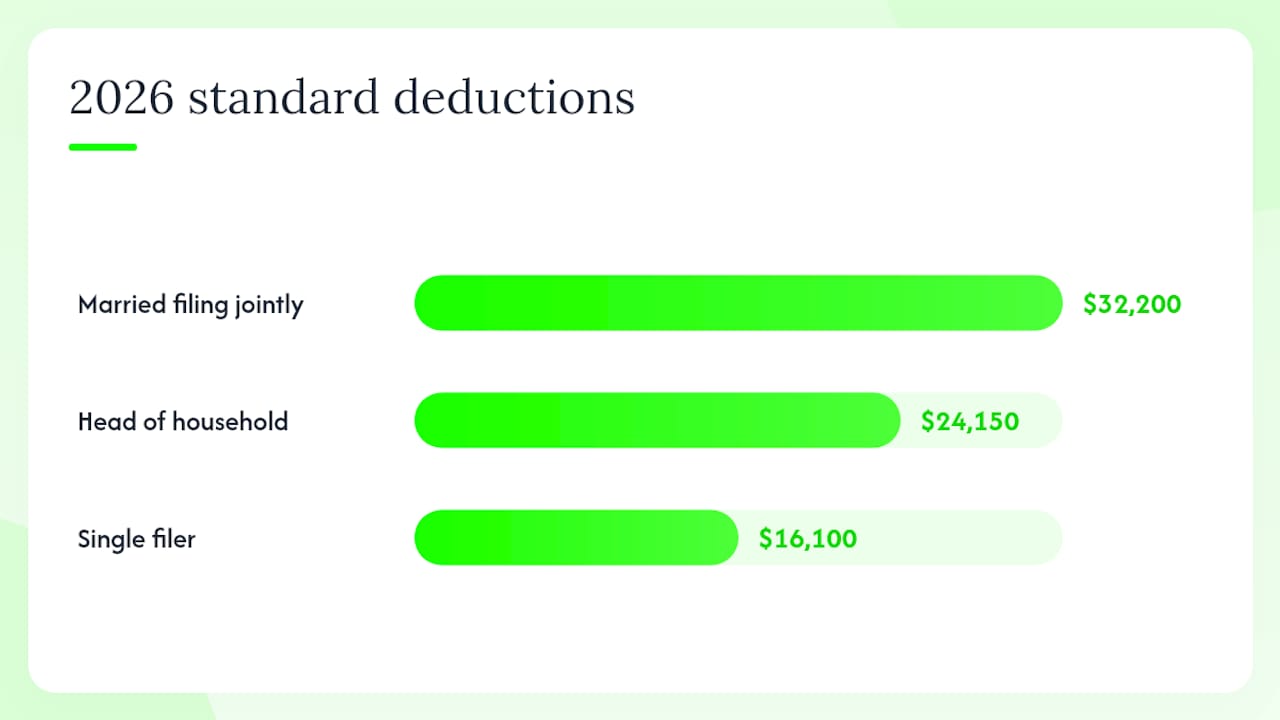
For tax year 2026, the IRS has set the standard deduction at $32,200 for married filing jointly, $16,100 for single filers, and $24,150 for heads of household. These thresholds affect whether itemizing deductions (including charitable contributions of crypto) makes sense for your situation.
When to hire a CPA: if you have cross-exchange histories, DeFi activity, NFT sales, staking income across multiple protocols, or foreign exchange accounts, the complexity exceeds what most tax software handles reliably. Automated tools are accurate for straightforward buy-sell histories; they struggle with bridging transactions, liquidity pool entries and exits, and wrapped-token mechanics.
Global developments and what they mean for U.S. institutional investors
The U.S. broker-reporting expansion is not happening in isolation. The OECD’s Crypto-Asset Reporting Framework (CARF) is being adopted across dozens of jurisdictions, creating a global information-exchange network for crypto transaction data. U.S. institutions with foreign exchange accounts or offshore custody arrangements will face increasing cross-border data sharing, even for exchanges not subject to U.S. broker rules directly.
The EU’s Markets in Crypto-Assets regulation (MiCA) is also reshaping how European counterparties operate, with compliance requirements that affect how U.S. institutions interact with EU-based exchanges and custodians.
Institutional risks to address now:
- FATCA and FBAR exposure: Foreign crypto exchange accounts with balances exceeding applicable thresholds trigger reporting obligations. The IRS has signaled increased scrutiny of foreign account disclosures.
- Cross-border withholding: Payments from foreign entities may carry withholding obligations that interact with crypto income in non-obvious ways.
- Custodial reconciliation: When assets move between custodians, cost-basis records must transfer with them. Gaps in custody chains create basis documentation problems that compound over time.
- Stablecoin treatment at scale: Large stablecoin positions used for treasury management may generate taxable events on redemption or swap, depending on the structure. This is an area where IRS guidance remains incomplete.
- DeFi and NFT activity: The IRS has not issued comprehensive guidance on liquidity pool entries, yield farming, or NFT royalties. Until it does, conservative treatment (recognize income at FMV on receipt; recognize gain/loss on disposal) is the defensible approach.
Practical steps for U.S. institutions:
Coordinate tax and treasury teams so that trading decisions account for tax consequences in real time, not at year-end. Document custody chains with timestamped records at every transfer point. Run data-matching controls between your general ledger, custodian reports, and on-chain records at least quarterly. For complex DeFi positions, engage a tax advisor with blockchain forensics capability before filing.
Critical dates, common mistakes, and penalties to avoid
Key dates for the 2026 tax year:
- January 1, 2026: Cost-basis reporting begins for covered digital assets acquired on this date or later.
- April 15, 2027: Standard filing deadline for 2026 tax-year returns (Form 1040).
- October 15, 2027: Extended filing deadline (requires Form 4868 filed by April 15). An extension gives you more time to file, not more time to pay. Taxes owed are still due April 15.
- Quarterly estimated payments: April 15, June 16, September 15, 2026, and January 15, 2027, for taxpayers with significant crypto income.
- Early 2027: Exchanges are expected to issue 1099-DA forms for 2026 activity. There is no minimum threshold for reporting crypto activity , and failure to report carries serious penalties.
Common mistakes that trigger problems:
- Failing to reconcile 1099-DA gross proceeds against your own records before filing. If the IRS receives a 1099-DA showing $50,000 in proceeds and your return shows $30,000, expect a notice.
- Misclassifying staking or airdrop income as capital gains instead of ordinary income. The tax rate difference is significant.
- Using portfolio-wide average cost basis when specific identification is available and more favorable.
- Treating wallet-to-wallet transfers as taxable disposals (they are not, but you must document them as transfers).
- Missing FBAR or Form 8938 filing requirements for foreign exchange accounts.
Penalties: Accuracy-related penalties run 20% of the underpayment. Fraud penalties are 75%. Failure-to-file adds 5% per month up to 25% of unpaid tax. If you discover an error after filing, an amended return (Form 1040-X) reduces exposure and demonstrates good faith. Voluntary disclosure before IRS contact is always better than waiting.
Blockchainreporter’s analysis: how often broker reports and on-chain records diverge
Reconciliation is where most investors are surprised. Based on patterns observed across practitioner workflows and publicly available exchange data, broker-issued 1099-DA reports frequently diverge from on-chain records in three distinct categories.
| Mismatch Category | Primary Cause | Typical Impact |
|---|---|---|
| Missing cost basis | Asset acquired before Jan. 1, 2026 (non-covered) | Investor must supply basis; IRS may assume zero |
| Transfer mislabeling | Wallet-to-wallet move recorded as a sale | Phantom gain reported; requires amended return |
| Fee misallocation | Gas or network fees excluded from basis | Basis understated; gain overstated |
The missing-basis problem is the most common and the most consequential. Because cost-basis reporting only applies to assets acquired on or after January 1, 2026, a large portion of existing holdings will arrive on 1099-DA forms with no basis entry. The IRS default, when basis is unknown, is to treat it as zero, which maximizes your taxable gain. Investors who cannot document their original acquisition price face that outcome.
Transfer mislabeling happens when an exchange records an outbound transfer to a personal wallet as a sale, generating a 1099-DA entry with proceeds but no corresponding purchase on the receiving side. Without transfer documentation, the investor appears to have sold an asset they still hold.
Fee misallocation is smaller per transaction but compounds across active traders. Gas fees paid to execute a swap, for example, are part of the cost of acquiring the new asset. Excluding them understates basis across hundreds of transactions.
Three recommendations based on these patterns:
- Reconcile early, not at tax time. Pull your exchange exports and on-chain records now and flag discrepancies while the data is fresh and exchange support is reachable.
- Preserve transfer evidence. For every wallet-to-wallet transfer, save the transaction hash, the sending and receiving addresses, and a note confirming both wallets belong to you.
- Engage a tax professional for complex histories. If you have assets on more than two or three exchanges, DeFi activity, or pre-2026 acquisitions with incomplete records, the reconciliation work exceeds what most software handles without human review.
Your step-by-step checklist to prepare for the 2026 filing season
Follow these steps in order. Each one builds on the last.
-
Pull all transaction exports from every exchange and wallet you used in 2026. Download CSV files and save API exports. (Time: short, 1–2 hours)
-
Organize by wallet and account. Create a folder or spreadsheet tab for each exchange account and self-custody wallet. (Time: short, 1–2 hours)
-
Identify and label all transfers. Flag every transaction where you moved assets between your own wallets. Document the transaction hash and both addresses. (Time: medium, 2–4 hours depending on volume)
-
Calculate gains and losses per lot. Using your preferred cost-basis method (FIFO, LIFO, or specific identification), calculate the gain or loss on each disposal. (Time: medium to long, depending on transaction count)
-
Reconcile against 1099-DA. When your 1099-DA arrives in early 2027, compare the gross proceeds line by line against your own records. Flag any discrepancy before filing. (Time: medium, 1–3 hours)
-
Classify income correctly. Separate capital gains from ordinary income (staking rewards, mining, airdrops, wages paid in crypto). Each category goes to a different form. (Time: short, 30–60 minutes)
-
Estimate your tax liability. Add up short-term gains (taxed as ordinary income) and long-term gains (taxed at preferential rates). Apply your marginal rate to get a rough liability figure. (Time: short, 30–60 minutes)
-
Set aside funds for taxes owed. If you have not been making quarterly estimated payments, set aside the estimated liability in a separate account now. (Time: immediate)
-
Prepare Form 8949 and Schedule D. Enter each capital transaction on Form 8949. Aggregate totals flow to Schedule D. (Time: long, varies by transaction volume)
-
Back up all records. Store copies of exports, transaction hashes, cost-basis elections, and 1099-DA forms in at least two locations (cloud and local). Keep them for at least seven years. (Time: short, 30 minutes)
How crypto tax rules affect retirement accounts and employer compensation plans
Crypto held inside a traditional IRA or Roth IRA is not subject to capital gains tax on trades made within the account. Gains compound tax-deferred (traditional) or tax-free (Roth), and the tax event occurs only on distribution. That makes retirement accounts one of the most tax-efficient vehicles for crypto exposure, particularly for long-term holders who would otherwise face short-term rates on active trading.
The practical limitation is access. Most traditional IRA custodians do not support direct crypto holdings. Self-directed IRAs can hold crypto, but they require a qualified custodian and come with higher fees and compliance complexity. Prohibited transaction rules under IRC Section 4975 apply strictly: using IRA-held crypto for personal benefit, or transacting with disqualified persons, can disqualify the entire account and trigger immediate taxation plus penalties.
Employer compensation plans are a different story. If your employer pays you in Bitcoin or another digital asset, that compensation is ordinary income at the fair market value on the date you receive it, reported on your W-2. Payroll taxes apply. Your basis in the received crypto equals the FMV reported as income, so a later sale triggers only the gain above that basis.
Some employers are beginning to offer crypto as a 401(k) investment option, though adoption remains limited and regulatory guidance from the Department of Labor has been cautious. If your plan offers crypto funds, the same tax-deferred treatment applies as with any other 401(k) investment: no tax on gains inside the plan, ordinary income tax on distributions.
One area to watch: the IRS has not issued comprehensive guidance on how the new broker-reporting rules interact with crypto held in retirement accounts. For now, transactions inside a qualified retirement account are generally not reportable as taxable events, but transfers out of the account (distributions) are. Keep records of the FMV at the time of any distribution involving crypto assets.
Why Blockchainreporter covers crypto tax changes and what to do next
Blockchainreporter tracks regulatory developments because accurate tax reporting is foundational to the long-term health of the crypto market. Investors who misreport, even unintentionally, face penalties that erode the gains they worked to build. The 2026 broker-reporting changes are the most significant shift in crypto tax enforcement since the IRS first classified digital assets as property in Notice 2014-21, and the implications for both retail and institutional investors are real and immediate.
The guidance in this article reflects current IRS rules and practitioner workflows, but it is general information, not personalized tax advice. Consult a licensed CPA or tax attorney for advice specific to your situation, particularly if you have DeFi activity, foreign exchange accounts, or complex cost-basis histories. For ongoing coverage of regulatory changes, market developments, and crypto news, visit Blockchainreporter .

This article is general information, not a substitute for advice from a qualified financial advisor. Consult a qualified financial professional about your own circumstances before acting on anything here.
Sources
The sources below are the primary and authoritative references used throughout this article. Bookmark them and check for updates, since IRS guidance pages are revised as new rules take effect.
- Instructions for Form 1099-DA
- Crypto tax guide
- A Beginner’s Guide to New U.S. Crypto Tax Rules | Coinbase
- How to File Crypto Taxes Precisely: IRS-Compliant 2026 Guide
Each of these sources represents either a primary IRS document or a practitioner/institutional explainer that interprets the primary rules. When IRS guidance conflicts with a third-party summary, the IRS document controls.
Recommended
- CoinRabbit And ChangeNOW Publish A Report On Financial Privacy In Digital Assets
- Bitcoin ETFs Post $11.6 Million Outflow As Ether Funds Add $9.2 Million
- ChangeNOW And CoinRabbit Release Joint Research On Financial Privacy In Digital Assets
- Crypto News Today | Top Headlines & Updates