



For institutional crypto holders, the choice between security and yield has long been a binding constraint. Custody providers keep assets safe but limit earning potential. Staking services require moving tokens off-platform, introducing counterparty risk. HashKey Cloud and BitGo are now dismantling that barrier. The two firms are integrating HashKey Cloud’s validator operations directly into BitGo’s custodial environment, letting fund managers, exchanges, and corporate treasuries stake assets without ever releasing them from cold storage.
According to a report from WuBlockchain , the partnership creates an institutional-grade non-custodial staking infrastructure. Clients can authorize on-chain validation and earn rewards while BitGo continues to safeguard the underlying private keys. The arrangement removes a major friction point for compliance teams that have been reluctant to transfer assets to hot wallets or delegate to external validator nodes.
How Non-Custodial Staking Works
The core innovation is the decoupling of custody from validation. Typically, staking means moving assets to a staking address, exposing them to smart-contract risk or the security posture of a third-party operator. HashKey Cloud runs the validator nodes; BitGo holds the assets. Clients keep governance over their funds inside the custody interface and only grant validation rights. That architecture resembles how traditional asset managers separate asset safekeeping from trade execution.
For ETF issuers and asset managers, this structure checks two boxes at once: it meets regulatory expectations around asset segregation while simultaneously enabling participation in proof-of-stake economies. It also narrows the attack surface. If a validator misbehaves or suffers a slashing event, the custodied assets themselves are not directly exposed, a distinction that matters to fiduciary clients.
RWA Tokenization and Settlement
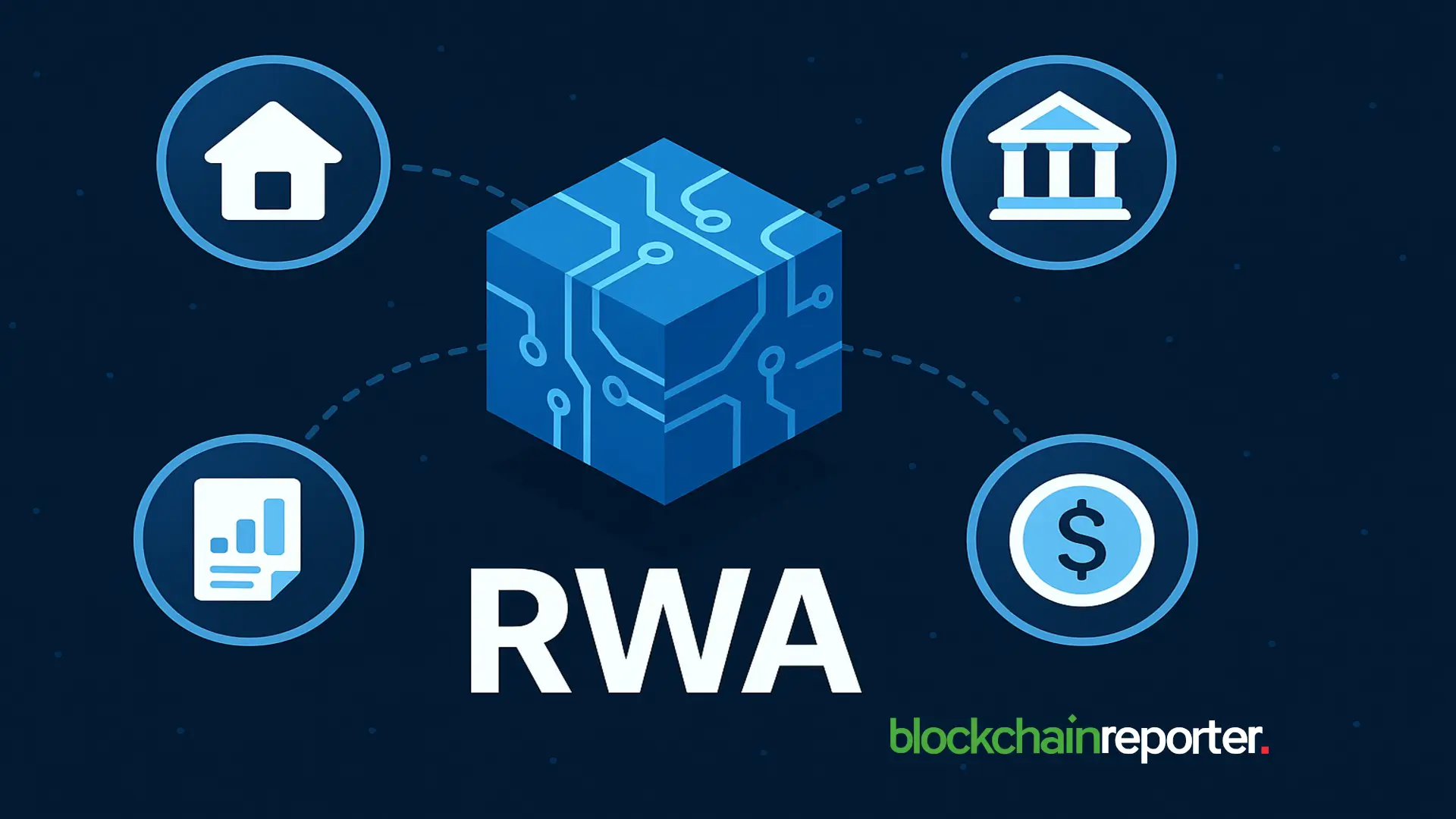
The collaboration extends beyond staking. HashKey Cloud and BitGo plan to jointly cover real-world asset tokenization, transaction settlement, and custody. That broadens the scope into an infrastructure layer where tokenized bonds, credit instruments, and other RWAs can be validated and settled without leaving the custody perimeter. The timing is notable: institutional appetite for tokenized assets has been rising quickly. The RWA tokenization market crossed $20 billion on-chain recently, driven by deals like Bullish’s $4.2 billion Equiniti acquisition and live Treasury settlements between Ondo and JPMorgan.
By merging validator capacity with a regulated custodian, HashKey Cloud and BitGo are positioning for a market where institutions want a single pipe to manage both tokenized securities and native crypto yields. It’s an end-to-end packaging that could appeal to traditional finance firms entering on-chain without deep operational crypto experience.
Demand, Regulation, and Market Structure
Institutional staking demand is not hypothetical. A recent spike in SUI, for instance, was driven by institutional staking flows , showing that when the custody question gets solved, capital moves quickly. Partnerships like this one lower the technical and legal barriers that have kept large allocators on the sidelines.
Yet important uncertainties remain. The model must still navigate a patchwork of jurisdictional rules. Staking yields are taxed and regulated differently across the U.S., Europe, and Asia. A non-custodial setup does not automatically exempt an institution from local licensing requirements. Also, the operational integration between two complex platforms—BitGo’s multi-chain custody and HashKey Cloud’s validator infrastructure—requires deep technical alignment that can take months to stabilize. Competitors offering bundled custody-and-staking solutions, including some of the largest exchanges, are not standing still either.
The regulatory backdrop adds pressure to get the structure right. With banks pushing against landmark crypto legislation just days before a Senate vote, the industry is bracing for frameworks that could demand stricter asset segregation. Products built on a model where custody and validation are distinct but functionally synchronized may find themselves aligned with emergent compliance standards rather than scrambling to retrofit.
What becomes clearer is that the infrastructure stack for institutional crypto is modularizing. Custody, staking, and settlement are no longer bundled inside a single black box. That evolution mirrors trends in traditional finance, where post-trade pipelines were eventually disaggregated for efficiency and resilience. For the institutions watching the space, the HashKey Cloud–BitGo integration is less a single product launch than a signal of how the plumbing is being rebuilt.