

The post Pi Network Price Prediction: Is New All-Time-Low Coming After 5% Crash? appeared first on Coinpedia Fintech News
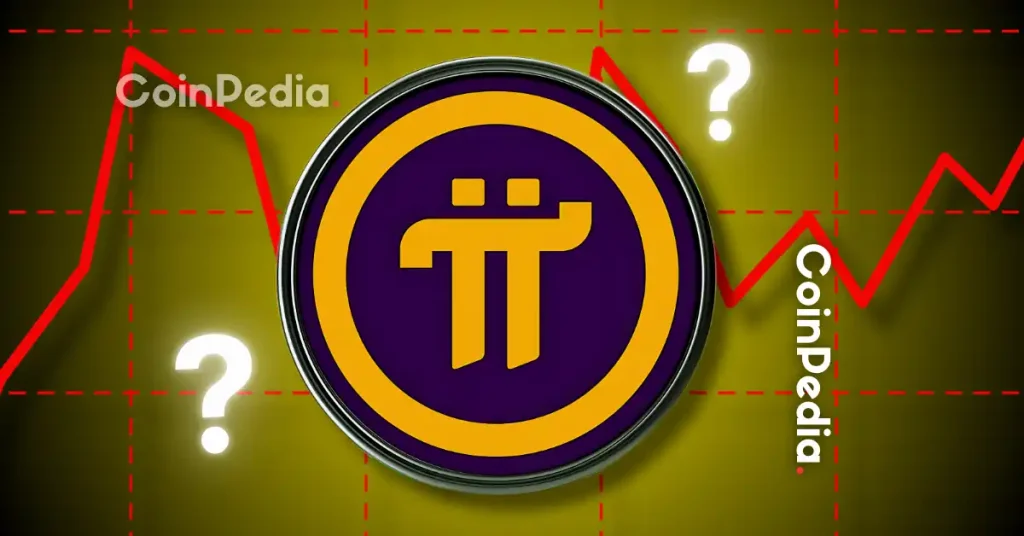
Pi Network’s price dropped close to 5% in the past 24 hours, sliding to $0.2080. The token’s market cap fell to $1.73 billion, while 24-hour trading volume jumped 14.86% to $20.2 million, signaling heavier activity during the decline.
The slide keeps Pi locked in a long-term downtrend. The token has already fallen 92% from its peak, and the charts show no clear signs of a bullish shift.
Support at $0.1919 Re-Emerges
The technical outlook remains weak. PI continues trading inside a descending channel, and sellers are firmly in control. The -DMI indicator sits above the +DMI, confirming strong bearish dominance.
Analysts now focus on the October 11 low at $0.1919, which stands as the next support. As long as Pi moves inside the $0.22–$0.24 zone, a short-term rebound is possible. But failure to defend the $0.21 level could trigger another sharp drop toward the critical $0.19 area.
Failed Breakout Sends PI Back Into Distribution Phase
Recent price action shows a failed breakout above high-time-frame resistance. The attempt was quickly rejected, and Pi fell back into its old trading range. The reversal produced a large bearish engulfing candle, a sign that buyers could not sustain momentum.
$PI has collapsed 92% and remains trapped in a strong, persistent downtrend.
— ⚚ Mr Blur
The price continues to move within a descending channel, with the -DMI firmly above the +DMI, confirming that sellers are still dominating the market. pic.twitter.com/VVb4ElytZG
? (@real_khanzunlah) December 11, 2025
The chart now shows a developing distribution phase, where sellers gradually unload positions while price weakens. This has pushed PI back toward the point of control, an area that usually sits at the center of trading activity. Even after a small bounce, momentum remains weak.
Resistance Builds Near $0.25
Pi also struggles to reclaim the 0.618 Fibonacci level, which sits just below $0.25. Each time the price approaches this zone, selling pressure intensifies. This resistance cluster reduces the probability of a trend reversal.
Below the current price, the most important support remains the $0.20 region, which aligns with the value-area low of the range.
Community Still Sees Long-Term Potential
Despite the falling price, some Pi supporters remain positive. Crypto commentator Dr. Pi said that the project should aim to become the “Apple Pay of Web3,” offering simple payments, embedded wallets, and a globally unified on-chain identity system.
They argue that Pi’s advantage lies not in speed or technology, but in making blockchain invisible to users. With over 60 million users, a unified account system, built-in KYC, and a full app ecosystem, the commentator believes Pi can compete if it delivers a seamless, one-tap payment experience.